Ponce Massacre
On Palm Sunday, March 21, 1937, police opened fire on a peaceful Nationalist Party march in Ponce, killing 19 unarmed civilians and wounding over 200.

The Ponce Massacre was one of the most significant acts of state violence in Puerto Rican history. On March 21, 1937, members of the Puerto Rican Nationalist Party organized a peaceful march in the city of Ponce to commemorate the abolition of slavery and to protest the imprisonment of Nationalist leader Pedro Albizu Campos.
Governor Blanton Winship had ordered the march's permit revoked at the last minute. When the marchers proceeded anyway, insular police surrounded them and opened fire without warning. The shooting lasted approximately 15 minutes. Nineteen people were killed, including two policemen caught in their own crossfire, and over 200 were wounded.
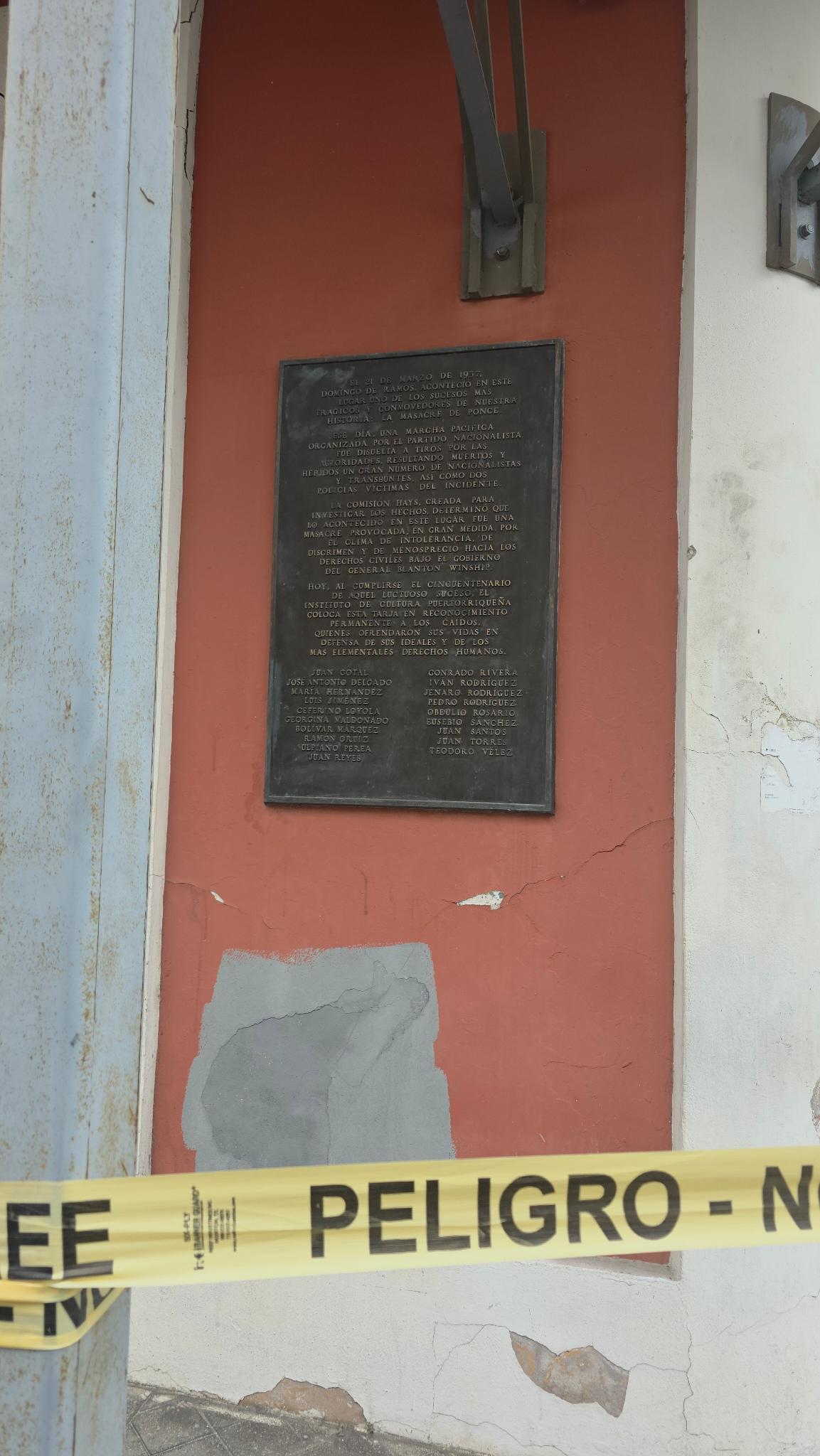
The American Civil Liberties Union (ACLU) conducted an independent investigation led by Arthur Garfield Hays, which concluded that the event was a "massacre" carried out by police acting under orders. The Hays Commission report stated: "The facts show that the weights of the evidence is that this was a massacre." Photographs taken by Carlos "El Flaco" Torres Morales documented the carnage and became powerful evidence of the atrocity.
The massacre galvanized the independence movement and radicalized a generation of Puerto Rican nationalists, including Lolita Lebrón, who later led the 1954 attack on the U.S. Capitol.
The Museum Today
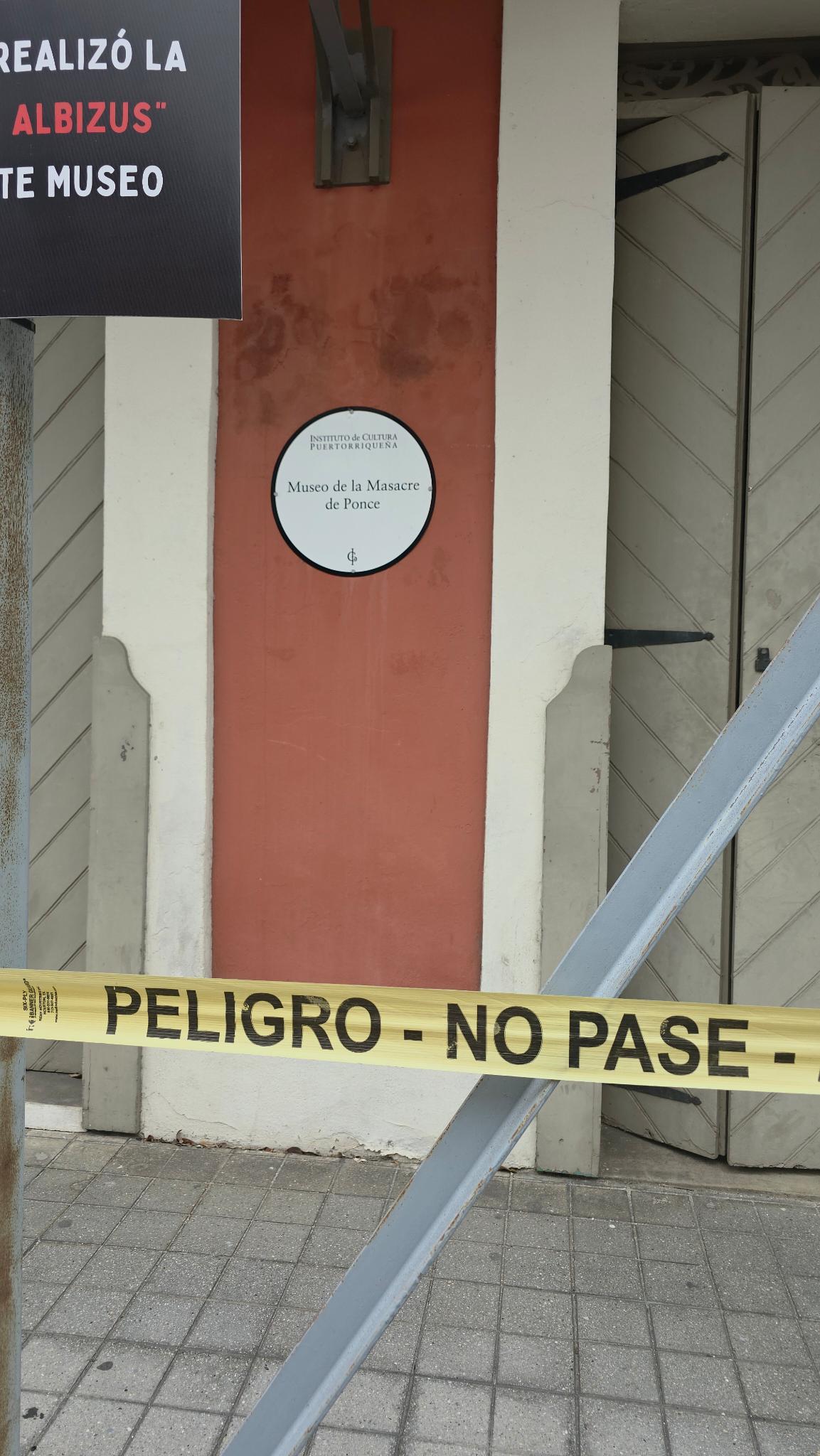
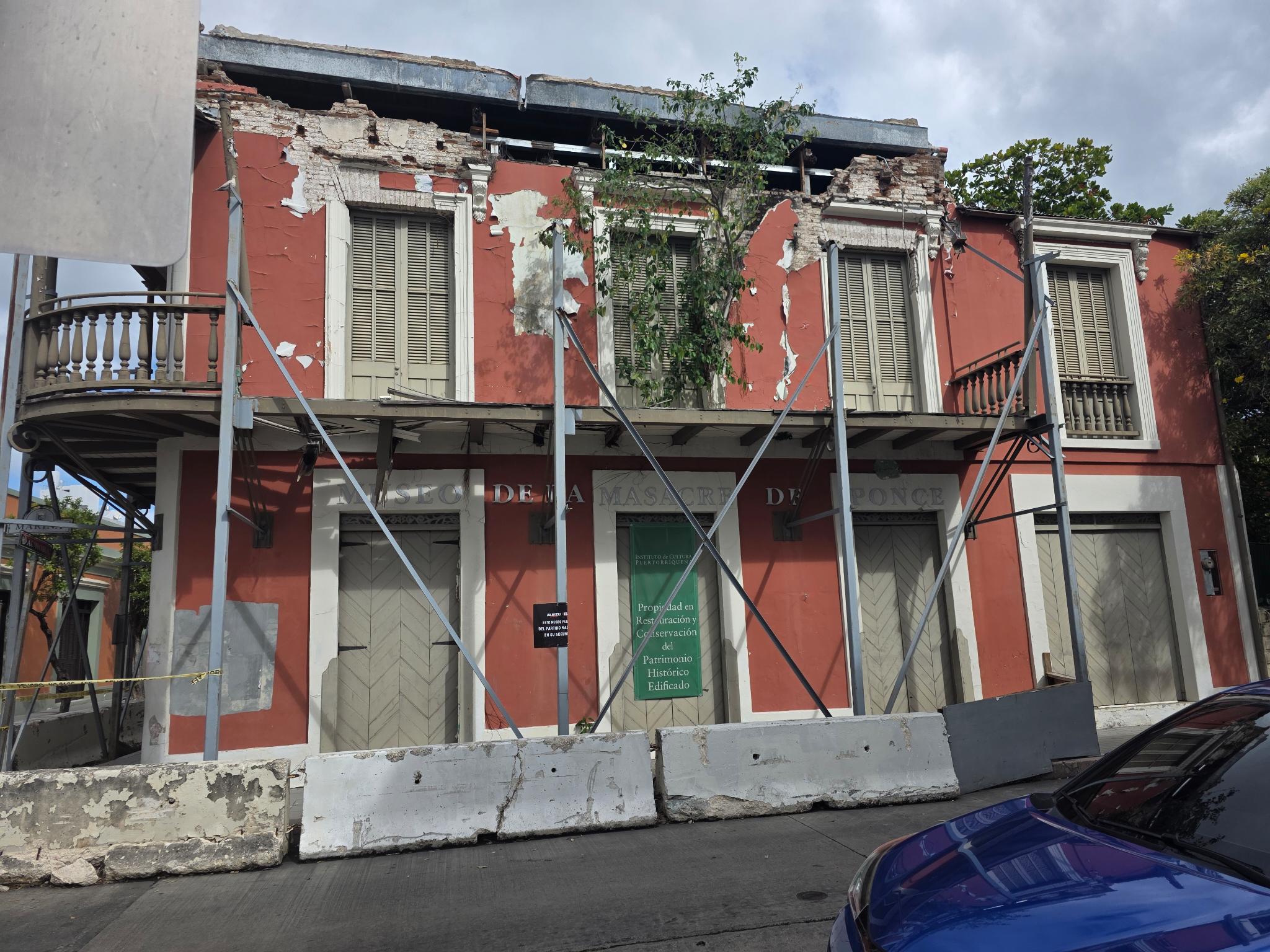
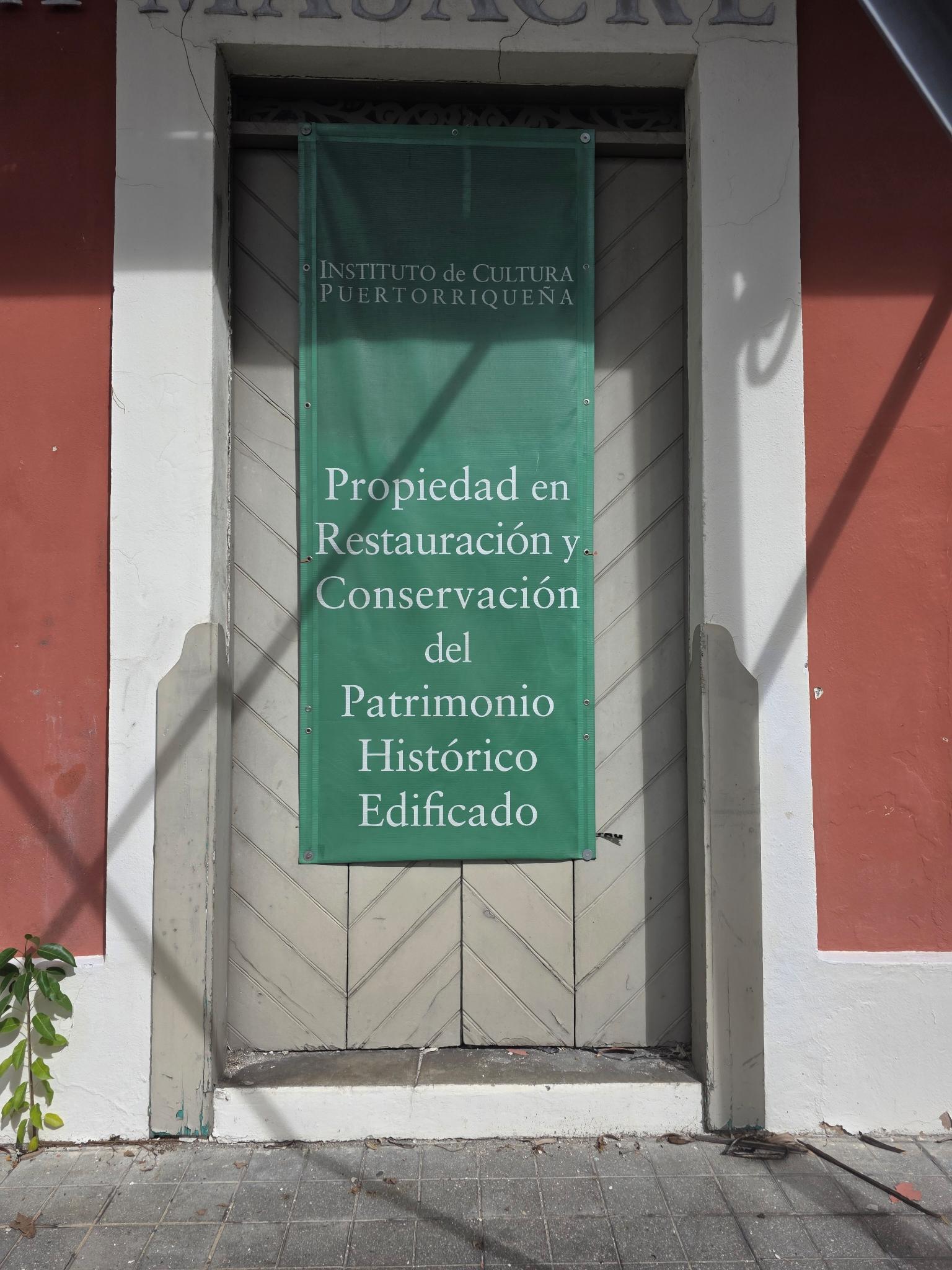
The Museo de la Masacre de Ponce sits behind yellow "PELIGRO - NO PASE" tape. The roof is caving in. The walls are cracking. The Institute of Puerto Rican Culture has placed a banner reading "Property in Restoration and Conservation of Built Historical Heritage" on the boarded front door — but the building is crumbling.
The museum is not on Google Maps. Local police did not know what the Ponce Massacre was. A deaf man pointed us to the building. These photos were taken in March 2026.
Historical Figures


Sources
-
Primary Source
Ponce Massacre photographs - Library of Congress
https://www.loc.gov/item/2017764618/ -
Primary Source
Ponce Massacre photograph - Farm Security Administration
https://www.loc.gov/resource/fsa.8b30694/ -
Primary Source
ACLU Report on the Ponce Massacre
https://www.aclu.org/documents/report-civil-rights-puerto-rico